Fun Board Games
Project Info
Developed For: Personal Project
Platforms: Windows, Windows Server
Responsibilities: Programming, Design, Art & Sound asset preparation
Tools: Unity, ASP.NET
Team size: 1
Time Frame: July 2022 – Present
Introduction
‘Fun Board Games’ is my first personal multiplayer game project, designed to support various board games where players can join lobbies and play online. The game is developed using the Unity Engine on the client side and ASP.NET SignalR on the backend to handle online and multiplayer features.
At the start of the project, the networking layer was implemented using the FishNet SDK, which required both the client and server to exist within the same Unity project. This introduced several limitations, such as preventing a proper server‑side database layer. To overcome these constraints, I recently migrated the networking layer to SignalR.
Main Features
Here are some of the main features of this game:
Currently, the player can log in with just a name each time, as there is no database.
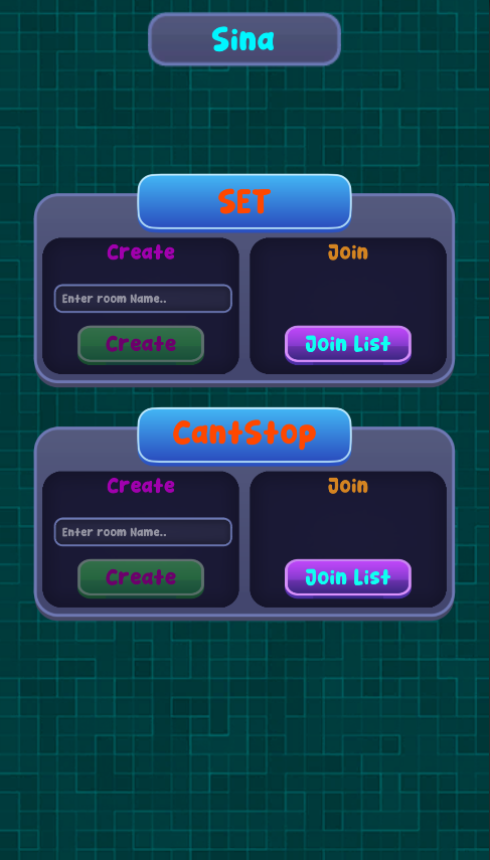
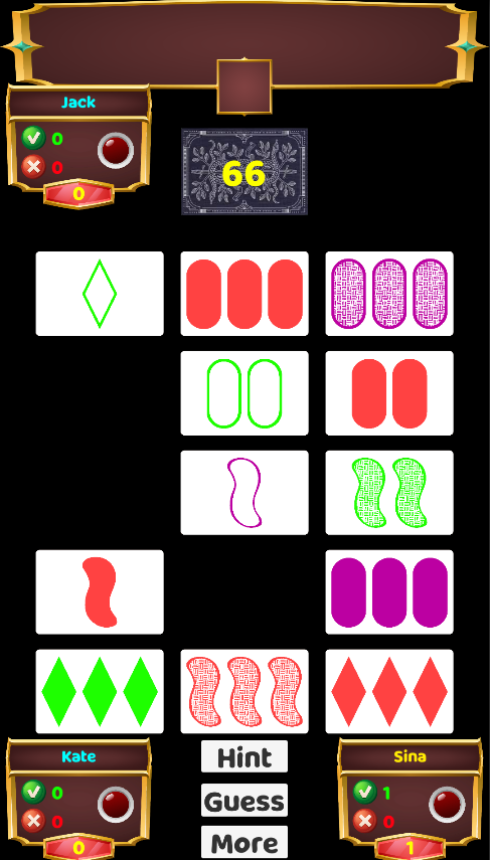
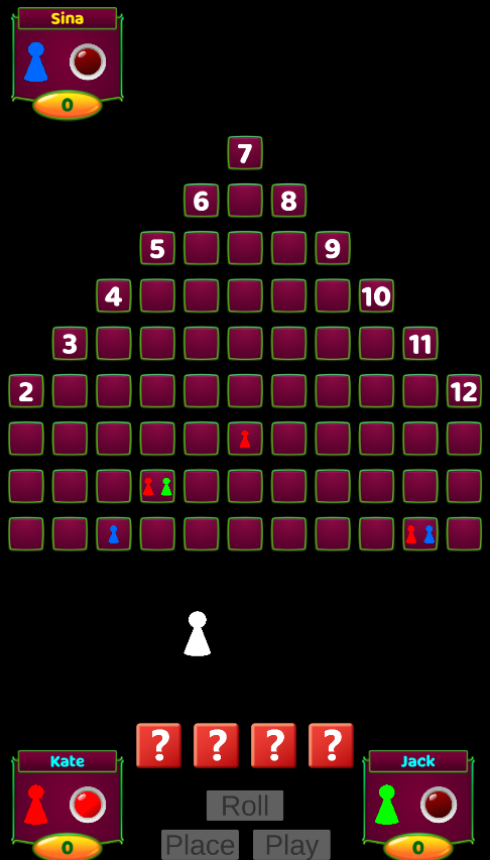
The game has two Board Games right now: “SET” and “Can’t Stop“.
For each board game, players can either create a new room with a custom name and wait for others to join, or browse a list of open rooms for each game and join one.
Each room can have 2 to 4 players.
When entering a room, all players must set the ‘ready’ flag.
- In the Editor, we can enable the fast-forward option for a specific game type, allowing players to join the game directly. This feature is designed to speed up gameplay debugging.
Future Plans
While the game is currently playable in the Unity Editor, it is far from being a publishable product. There are numerous tasks that need to be completed to make the game ready for players from start to finish. Below is a list of tasks organized by priority:
Adjust certain parameters in the existing ‘SET’ and ‘Can’t Stop’ games to be dynamic, allowing for the creation of various game modes.
Enhance the artistic elements in the game.
Set up a database for the players and game, using ‘EF Core’ as the framework for database implementation.
Create an auto-login system using device ID.
Making the matchmaking system scalable to allow more games to be added with minimal effort.
- Add some more board games.